
Top 3 Beeline Delivery Alternatives 2026
Discover 3 Beeline Delivery alternatives to help you choose the best medical courier providers for your healthcare logistics needs.

Top 3 Beeline Delivery Alternatives 2026
Finding a medical courier service that supports real-time tracking, HIPAA compliance, and integrated workflows is a challenge for many health systems. Many delivery services do not offer direct EMR integration, secure patient tracking, or coverage tailored to clinical logistics rather than consumer shipments. This comparison covers clinical focus, technology, and coverage across three leading alternatives so health systems can match a platform to specific operational and compliance needs.
Table of Contents
Copergrine
At a Glance
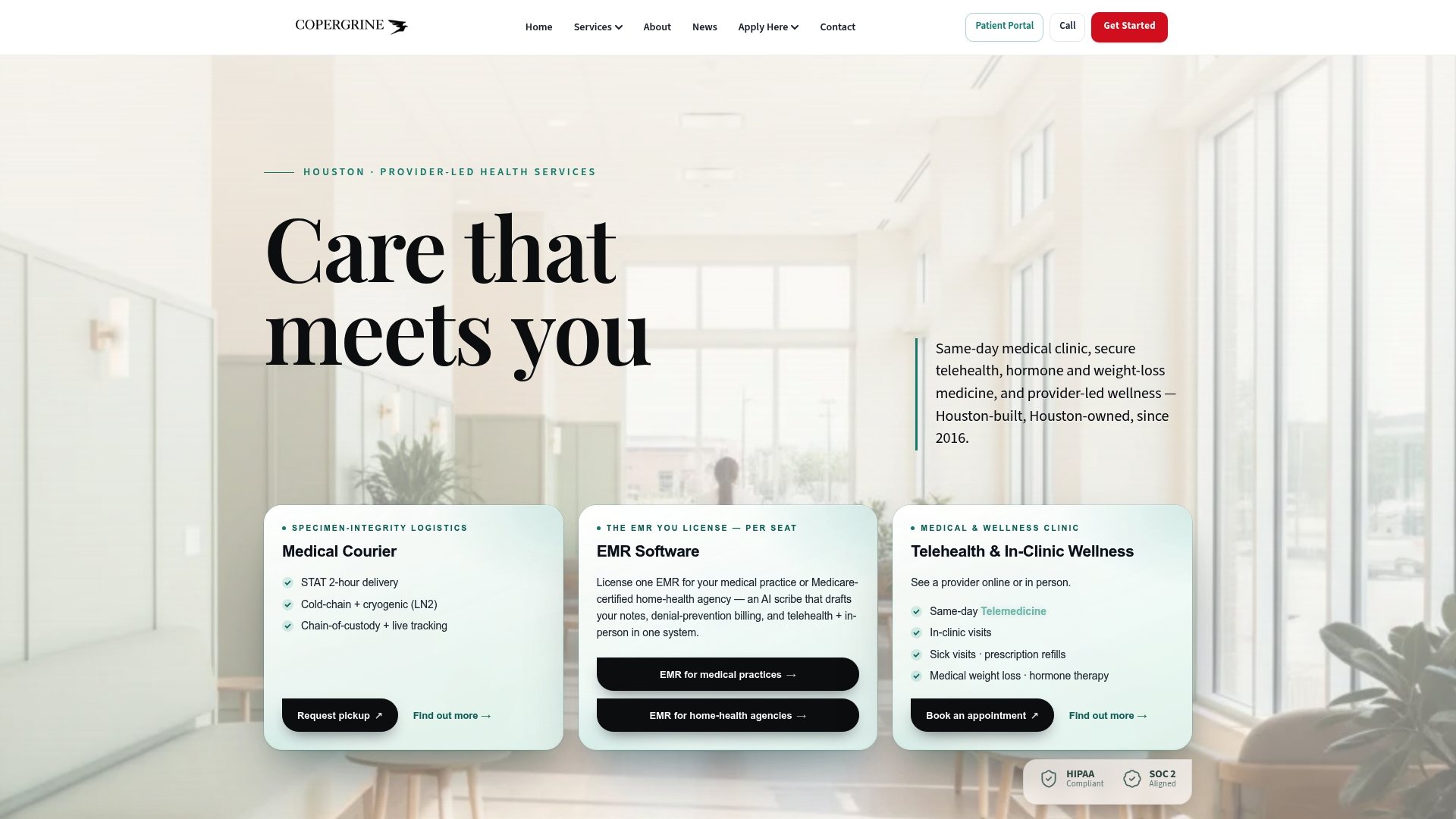
Copergrine's marketing materials state STAT 2-hour courier delivery and same day telehealth visits, with cold-chain and cryogenic options plus real-time GPS tracking. This claim signals a logistics focus that links specimen movement to clinical workflows. The company was founded in Houston and operates telehealth clinics, a proprietary EMR, and a medical courier service.
Core Features
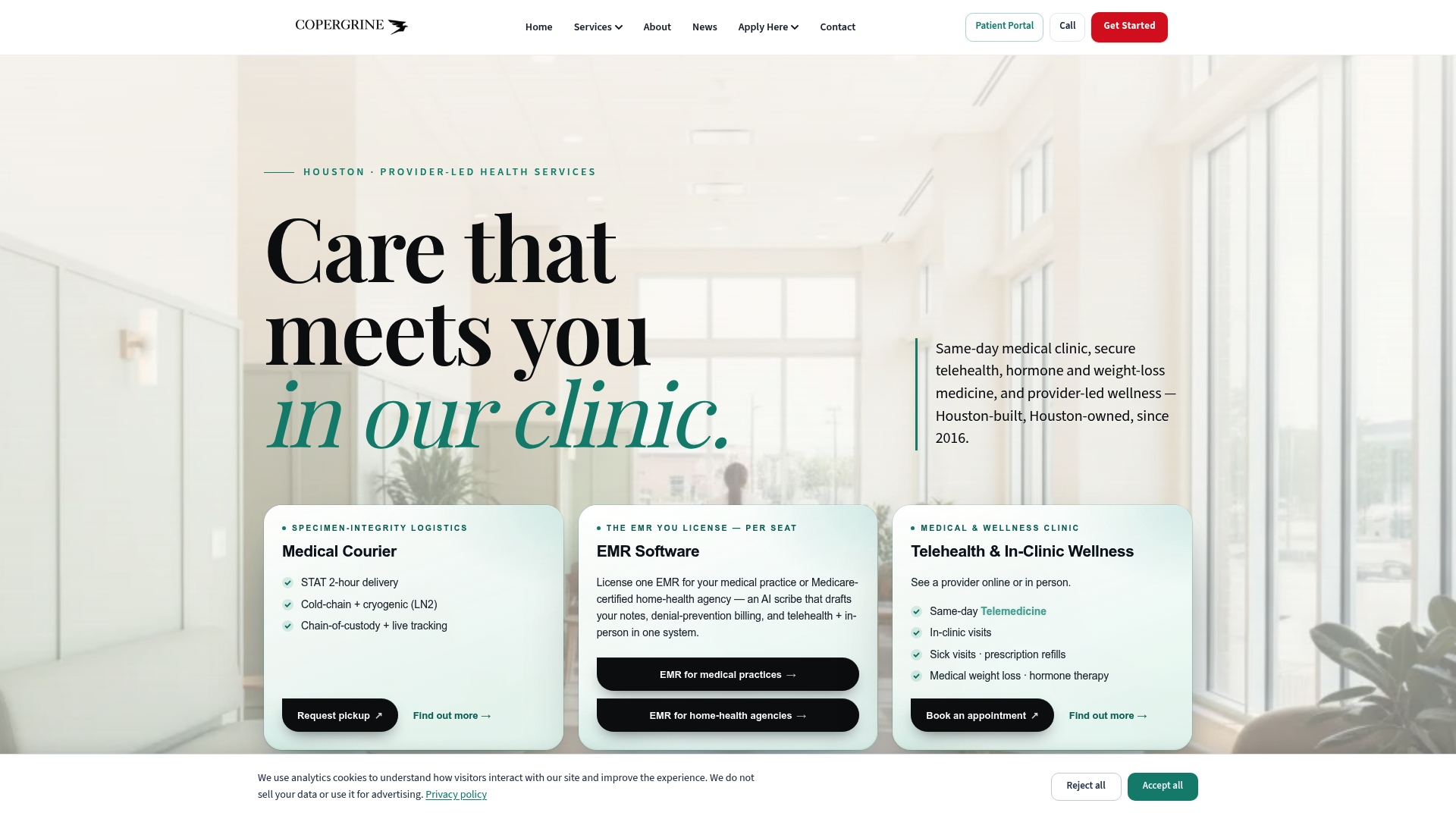
The platform bundles telehealth visits with charting, e-prescribing, billing, and secure messaging inside a single clinical workflow. It supports same day clinic visits, either virtually or in person, and offers medical courier services with cold-chain and cryogenic handling. Copergrine also licenses an EMR that includes an AI scribe, denial prevention tools, and documentation for both telehealth and in-person encounters, plus provider-led weight loss and hormone therapy protocols.
Key Differentiator
Copergrine combines licensed EMR software, same day telehealth, and on-demand courier logistics under a single provider-led organization. That combination links clinical notes and orders to physical specimen transport with real-time visibility. The result is fewer handoffs between clinic staff and couriers, which reduces coordination work for practices that handle time sensitive specimens.
Pros
The platform centers on provider-led services that align clinical care with logistics and practice management. Its courier offering includes real-time GPS tracking, which helps practices monitor chain of custody during specimen transport. Flexible EMR licensing supports practices and home-health agencies, while the telehealth stack covers charting, e-prescribing, billing, and messaging in one environment.
Cons
- Publicly accessible product detail and pricing pages are not available, which limits independent assessment of specific features and costs.
Who It's For
Medical providers, clinics, and home-health agencies that need integrated telehealth, specimen logistics, and practice management are the primary fit. Practices based in Greater Houston will find the on-the-ground courier coverage useful. Nationwide practices seeking licensed EMR access with logistics options may also consider the platform.
Unique Value Proposition
Real-time GPS tracking tied directly to a licensed EMR and an AI scribe lets clinical teams link patient encounters to specimen movement. That linkage cuts coordination steps between triage, documentation, and courier dispatch. For busy practices, this can reduce administrative time spent reconciling orders and tracking specimens.
Real World Use Case
A clinic licenses Copergrine's EMR, runs virtual visits with built-in e-prescribing, and schedules courier pickup for blood samples. The clinic sees fewer tracking calls because staff can view courier location alongside the patient chart.
Pricing
Pricing is not publicly available. The website's product and pricing pages do not provide accessible details, so you must contact Copergrine directly for quotes and licensing options.
Website: https://copergrine.com
Rapid Medical Logistics

At a Glance
Rapid Medical reports operations across 26 states, combining software with on-the-ground delivery services. The company focuses on last mile healthcare logistics for hospitals, labs, pharmacies, and DME providers. Its stack pairs route optimization software with a driver app and real-time visibility for stops and proofs of delivery.
Core Features
The platform includes end-to-end logistics software that targets route optimization, cost reduction, and performance tracking. Its offering pairs a driver app for barcode scanning and proof of delivery with real-time route monitoring that tracks stops and exceptions. The software also covers internal logistics, patient movement, and durable medical equipment delivery workflows.
Key Differentiator
Rapid Medical combines a SaaS platform with fully enabled logistics services so clients can operate software and field teams together. That combined model gives customers operational transparency and control instead of leaving last mile execution to a third party. The result is a closer alignment between scheduling, execution, and reporting than many traditional logistics vendors provide.
Pros
Rapid Medical reports cost reductions of 20–30 percent in logistics operations for some clients, which signals measurable savings when routing and mode selection change. The vendor offers both software and staffed services, so health systems can choose software-only or a managed model that includes drivers and operations. The platform provides visibility into routes, stops, and delivery proofs, and the modules cover specimen movement, patient transport, and DME workflows.
Cons
- Some third-party reviews describe complexity when integrating the platform with existing health system infrastructure.
- Staff used to traditional logistics providers face a learning curve for the software and operational workflows.
- Specific pricing and deployment details are not publicly listed, so procurement often requires custom contracting.
When It May Not Fit
Organizations with simple, low-volume delivery needs will likely find Rapid Medical more capability than required. Smaller clinics without internal IT resources may struggle with the implementation effort this platform can require. The product best serves larger systems that need both software and operational control.
Who It's For
Health systems, hospital networks, and medical logistics managers who need visibility and control over last mile movements will find this product relevant. Laboratory operations and pharmacy chains that require documented specimen or medication deliveries benefit from the combined software and driver services. DME providers that require proof of delivery and route accountability are also a fit.
Real World Use Case
Rapid Medical's marketing materials describe a large hospital network that implemented the SaaS platform and logistics services and reported a 25 percent reduction in logistics costs. The deployment included centralized routing, driver execution through the app, and consolidated reporting across multiple campuses. That example shows how software plus field operations can reduce trips and tighten delivery windows.
Pricing
Pricing is not publicly specified and appears to be customized to client needs. Contracts typically reflect a mix of software licensing and managed logistics fees tailored to volume and geographic scope. Procurement will require direct discussion with the vendor to get deployment and cost details.
Website: gorapidmedical.com
Phox Health
At a Glance
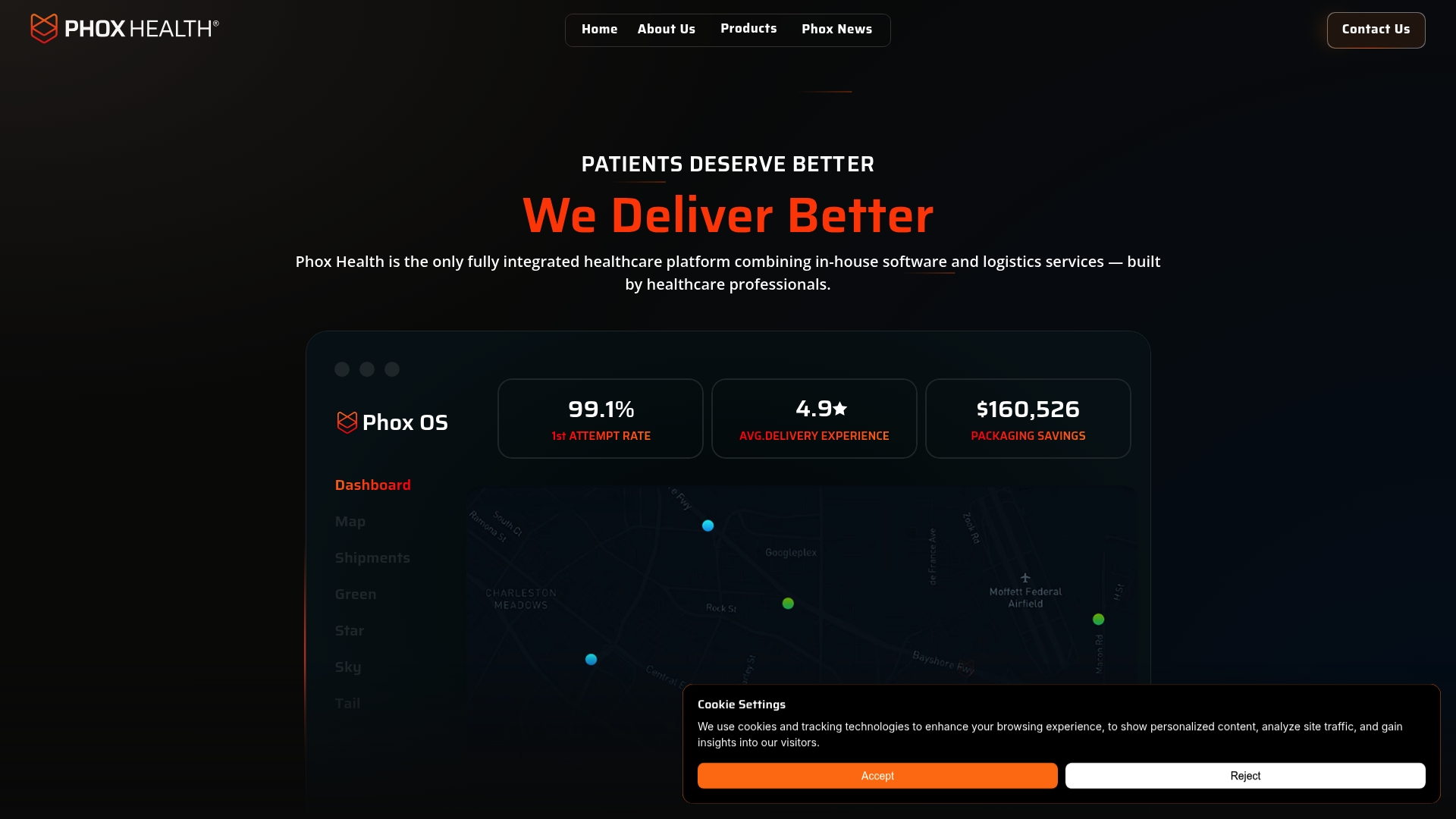
Zero integration setup works with any EMR or pharmacy system and lets hospitals start without custom builds. The platform focuses on medication delivery, specialty meds, and lab sample transport across the United States. Phox launched in 2020 and targets enterprise health systems and specialty pharmacies.
Core Features
The vendor states the platform is HIPAA and SOC 2 compliant. Phox combines hospital grade data security with a zero integration approach that connects to EMRs and pharmacy systems without custom APIs. It supports QR code delivery requests, proof of delivery that records RX numbers and driver locations, and a branded patient tracking experience that shows real time status.
Key Differentiator
Phox’s main strength is pairing EMR compatibility without integration work and a patient facing delivery experience that can carry a provider brand. That mix targets clinical logistics workflows where traceability and patient communication matter more than retail conveniences. The result aims to reduce manual handoffs while keeping clinical data protected.
Pros
Phox lists rapid implementations, claiming 'go live' in days for many customers, which shortens the time from procurement to active deliveries. The vendor advertises high patient satisfaction through real time updates and personalized tracking, a useful feature for specialty meds and vulnerable patient groups. The platform also captures delivery proof with RX numbers and driver locations and supports multiple logistics partners including medical couriers and major carriers.
Cons
- Buyers needing deep on premises customization will find limited off the shelf options. This product favors cloud delivered workflows.
- Advanced telehealth or remote medication management workflows may require additional integrations beyond Phox’s current capabilities.
- The platform is not designed for consumer retail or general purpose non medical logistics.
When It May Not Fit
Phox may not fit small clinics or solo practices that lack centralized IT and procurement. Operations that require extensive on premises control or heavy custom workflow coding will likely need a different solution. Retail delivery programs or non medical couriers will not match the clinical focus and compliance model here.
Who It's For
Large health systems, specialty pharmacies, and clinical networks that need secure, scalable medication logistics will find the product aligned with their needs. Organizations that must preserve patient data protection and maintain chain of custody during transport will benefit. Small practices and consumer retail operators are not the primary audience.
Real World Use Case
Ochsner Health uses Phox to deliver specialty medications and move lab samples across its network with branded tracking for patients. That deployment emphasizes live tracking, proof of delivery tied to prescriptions, and reduced manual coordination for pharmacy teams. The example shows how the platform attaches clinical metadata to each shipment.
Pricing
Phox lists pricing as not applicable and informational only. Public pricing is not available. Prospective buyers should request a custom quote from the vendor for enterprise or system wide deployments.
Website: phoxhealth.com
Comparison of alternatives
Medical courier services are essential for healthcare establishments, enhancing workflow consistencies and logistics operations. This overview evaluates how three operators, Copergrine, Rapid Medical Logistics, and Phox Health, meet specialized requirements.
Integration of Services
While all providers address industry needs, Copergrine uniquely integrates licensed EMR software, same-day telehealth visits, and on-demand logistics. This approach minimizes handoffs between varied teams and simplifies workflows. Meanwhile, Rapid Medical focuses on route optimization and operational control through its advanced software suite, enabling tailored logistics operations. Phox Health ensures rapid deployment options and rigorous compliance adhering to medical standards, addressing integration across care facilities without custom coding.
Geographic Coverage and Focus
Geographic reach markedly influences selection. Rapid Medical Logistics operates across 26 states, offering substantial service coverage compared to others. This broad presence suits expansive systems requiring multi-location servicing. Conversely, Phox Health directs its expertise toward medication delivery and lab transportation, adopting a patient-centric communication strategy with branded engagement.
Best fit
- Clinics prioritizing workflow efficiency and logistics integration benefit from Copergrine's combined telehealth and courier tracking environment.
- Health systems necessitating extensive logistics coverage may consider Rapid Medical Logistics due to its significant operational footprint.
- Enterprises requiring HIPAA compliance and prompt deployment without intricate integrations may prefer Phox Health's focus on security and immediacy.
Our pick
Copergrine combines logistics with telehealth and EMR systems, streamlining care workflows into a centralized platform. This makes it an exceptional choice for providers with active clinical and transport needs in one solution. While alternatives excel in defined areas, such as Rapid Medical's expansive reach or Phox Health's compliance-centric model, Copergrine stands out for those seeking operational collaboration. For setups requiring only single-dimension features, alternate options may hold better placement.
The comparison shows which platform aligns medical logistics and telehealth services most efficiently.
| Product | Key Differentiator | Best For | Pricing | Notable Limitation |
|---|---|---|---|---|
| Copergrine | Integrated logistics and telehealth EMR | Providers needing specimen tracking | Price not published | Limited publicly accessible product details |
| Rapid Medical | SaaS and operations integration | Health systems with last mile control | Price not published | Complexity in implementation for existing systems |
| Phox Health | No integration needed for EMR compatibility | Specialty pharmacies and large networks | Price not published | Limited advanced telehealth features |
How Can Healthcare Providers Improve Delivery and Telehealth Coordination Beyond Beelinedelivery.com Alternatives?
Copergrine addresses challenges reported by clinics and home-health agencies managing urgent specimen logistics alongside same-day telehealth visits. The integration of rapid medical courier services with a licensed EMR platform enables seamless real-time tracking from patient encounter to specimen delivery. This reduces administrative burdens, improves chain of custody visibility, and aligns clinical documentation with courier dispatch. Practices in Greater Houston and nationwide benefit from on-demand telemedicine, AI-assisted charting, and immediate courier pickup that ensures timely specimen transport.
Explore how Copergrine improves clinical workflows and courier logistics together. Visit Copergrine to learn how your practice can reduce coordination efforts and enhance patient care using an all-in-one telehealth and courier platform.
Take control of your clinic’s specimen transport and telehealth services now by contacting Copergrine. Receive tailored details to connect your clinical operations, improve documentation accuracy, and monitor shipments with real-time GPS tracking.
FAQ
#### What unique telehealth capabilities does Copergrine offer?
Copergrine features same day telehealth visits, which accommodates urgent medical needs efficiently. This service links directly to its proprietary EMR, combining charting, e-prescribing, and secure messaging in a unified workflow. It is an ideal choice for practices needing fast patient access combined with streamlined documentation.
#### How does Rapid Medical's pricing model compare to Copergrine's?
Rapid Medical offers customized pricing based on client needs, which can lead to cost variances. In contrast, Copergrine’s pricing details are not publicly listed, requiring direct discussion for quotes and options. This may make Copergrine a more accessible option for practices that prefer predefined packages over custom contracts.
#### Can I expect real-time tracking with Copergrine's courier services?
Copergrine provides real-time GPS tracking for its courier services, ensuring that practices can monitor the chain of custody during specimen transport. This feature enhances accountability and reduces coordination headaches for clinics dealing with time-sensitive specimens.
#### What are Phox Health's strengths compared to Copergrine?
Phox Health excels in providing a zero integration approach, allowing rapid implementation with existing EMR systems. Copergrine, while integrating telehealth and logistics effectively, may require more setup compared to Phox for practices looking for quick deployment with minimal IT involvement.
#### How does Copergrine support medication management?
Copergrine supports medication management through its e-prescribing feature within the telehealth stack, adding convenience to patient care. This allows clinics to efficiently handle prescriptions while linking them to documentation and logistics for specimen transport.